
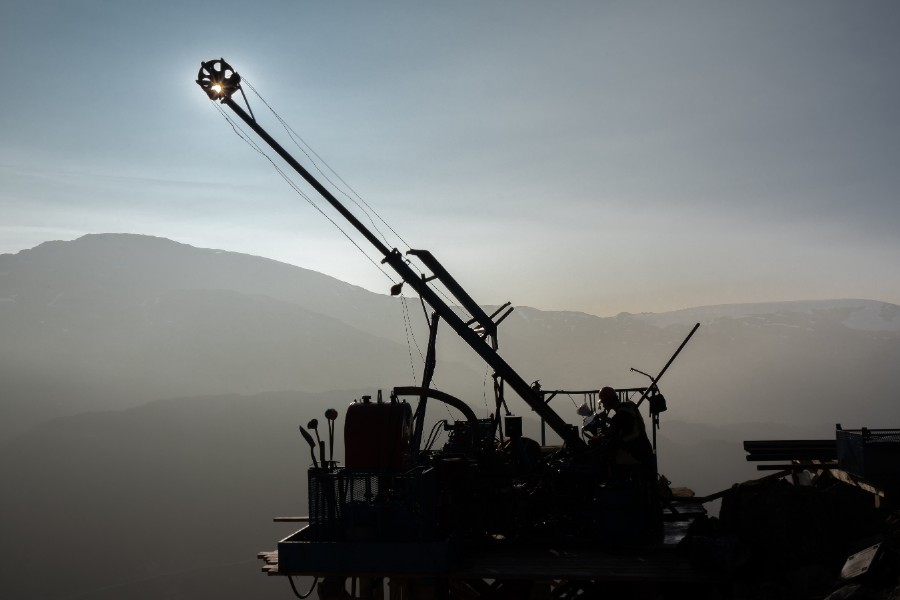
incl. 16.1 g/t over 5.0 m — GE21-31 (2021)
[ High-Grade Satellite ]
The Georgia Project
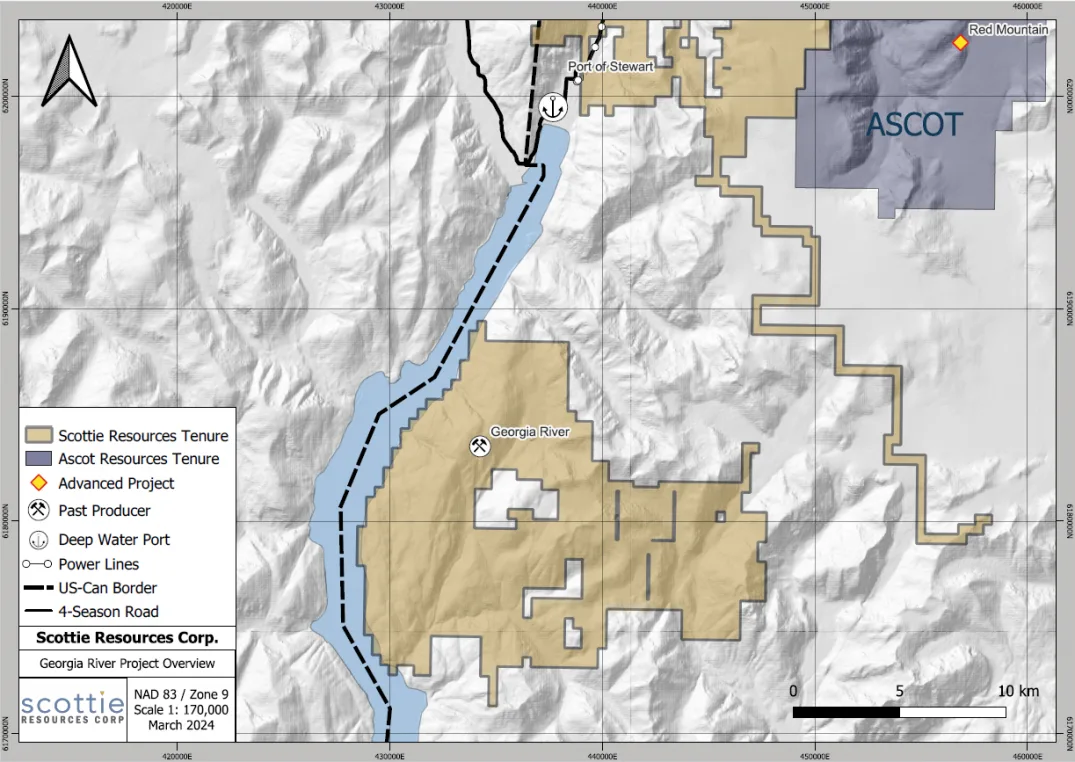
17,625 hectares on ice-free tidewater, 16 km south of Stewart — centred on the past-producing 22.6 g/t Georgia River Mine.
17,625 hasurrounding the past-producing mine
22.6 g/thead grade when it last operated in 1939
165 g/t Augrab sample from the 2023 vein discovery
16 kmfrom Stewart on ice-free tidewater
[ Overview ]
A Mine-Sized System, Barely Drilled
The Georgia River Mine last operated in 1939 with a head grade of 22.6 g/t gold and contains 1.2 km of underground access on three levels. Historic work focused almost exclusively on the existing mine workings — leaving the much larger hydrothermal system essentially untested.
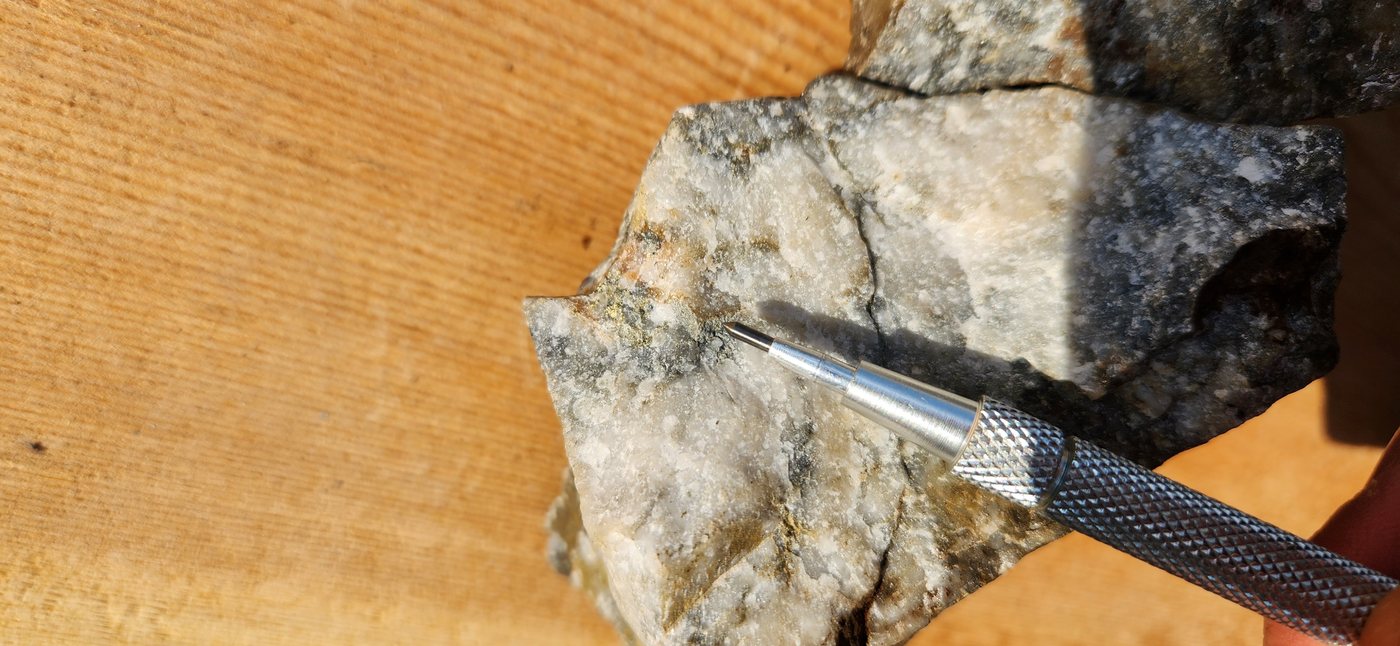
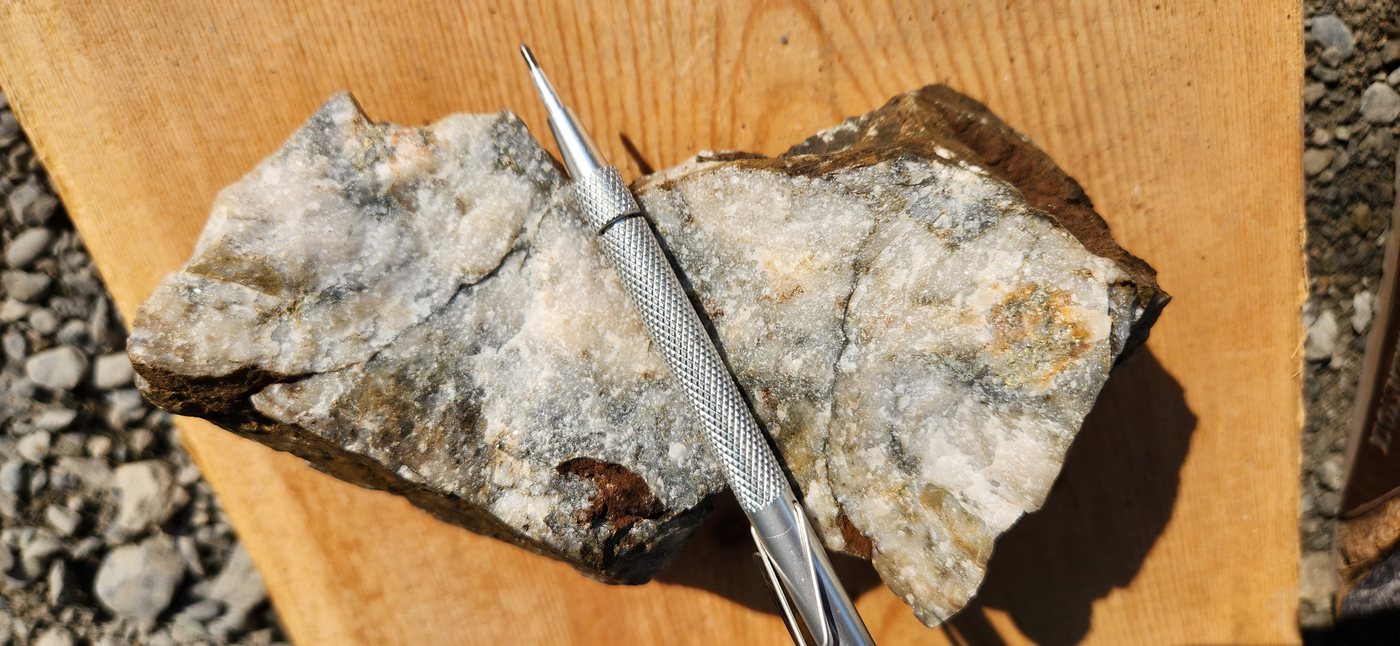
In 2023, prospecting discovered a new high-grade vein structure that had never been sampled: initial samples yielded 165 g/t gold with abundant visible gold, 3.5 km along strike from the historic mine — with similar geology and orientation to the veins previously mined.
A 1990 historic estimate for the SW Vein (276,403 t at 27.6 g/t Au) pre-dates NI 43-101 and is not treated as a current mineral resource.
[ Drill Highlights ]
Gold Where They Left Off
with 36.6 g/t silver — GE20022 (2020)
with 35.5 g/t silver — GE20023 (2020)
historic intercept, with 171 g/t silver
incl. 342.5 g/t over 0.3 m — historic
with 213.5 g/t silver — historic
[ The Historic Mine ]
1.2 km of Underground, Waiting
The Georgia River Mine was explored from the 1970s onward by several companies intent on restarting it — but that historic work focused almost exclusively on the area around the existing workings, which sit in the footwall of a major deformation zone.
Gram-plus gold values over 590 metres of projected surface trace, and the veins in the old mine itself, confirm a potentially large Early Jurassic hydrothermal system — of which only a small part has ever been drill-tested. Scottie's 2020 program added 3,600 m in 24 holes, extended mineralization along strike and at depth, and recovered and assayed 2,750 m of historic core.
Next Steps at Georgia
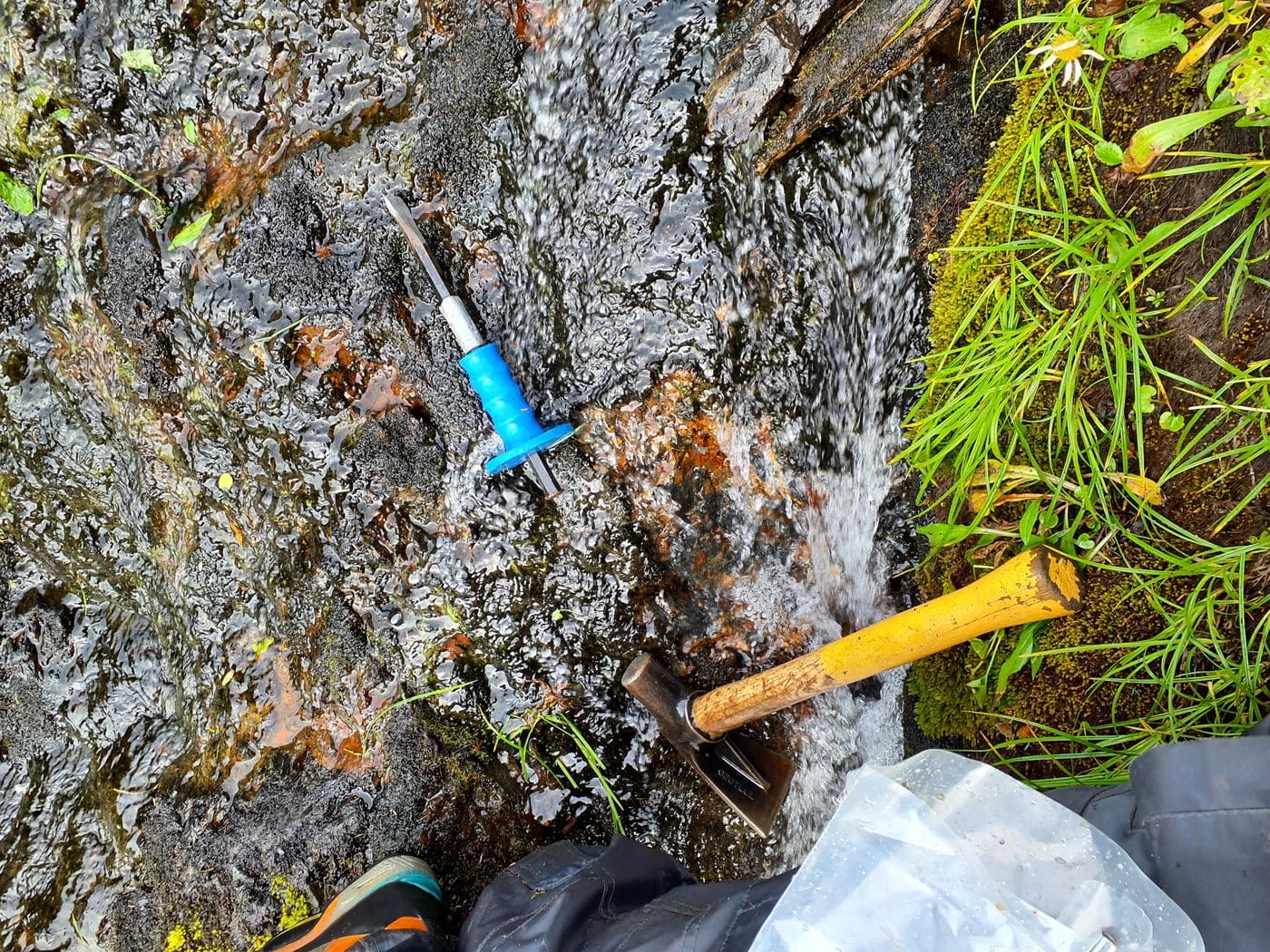
Mapping and sampling between the 2023 discovery and the historic mine will test whether mineralization is continuous across 3.5 km of strike.